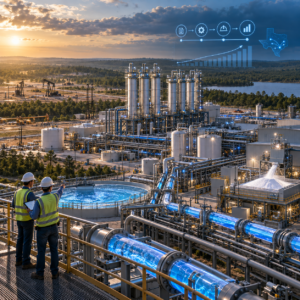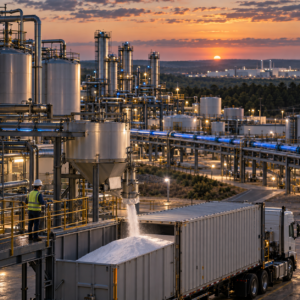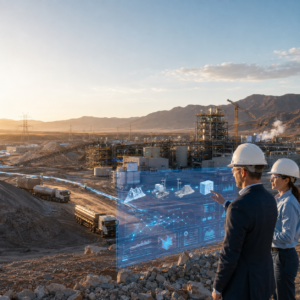
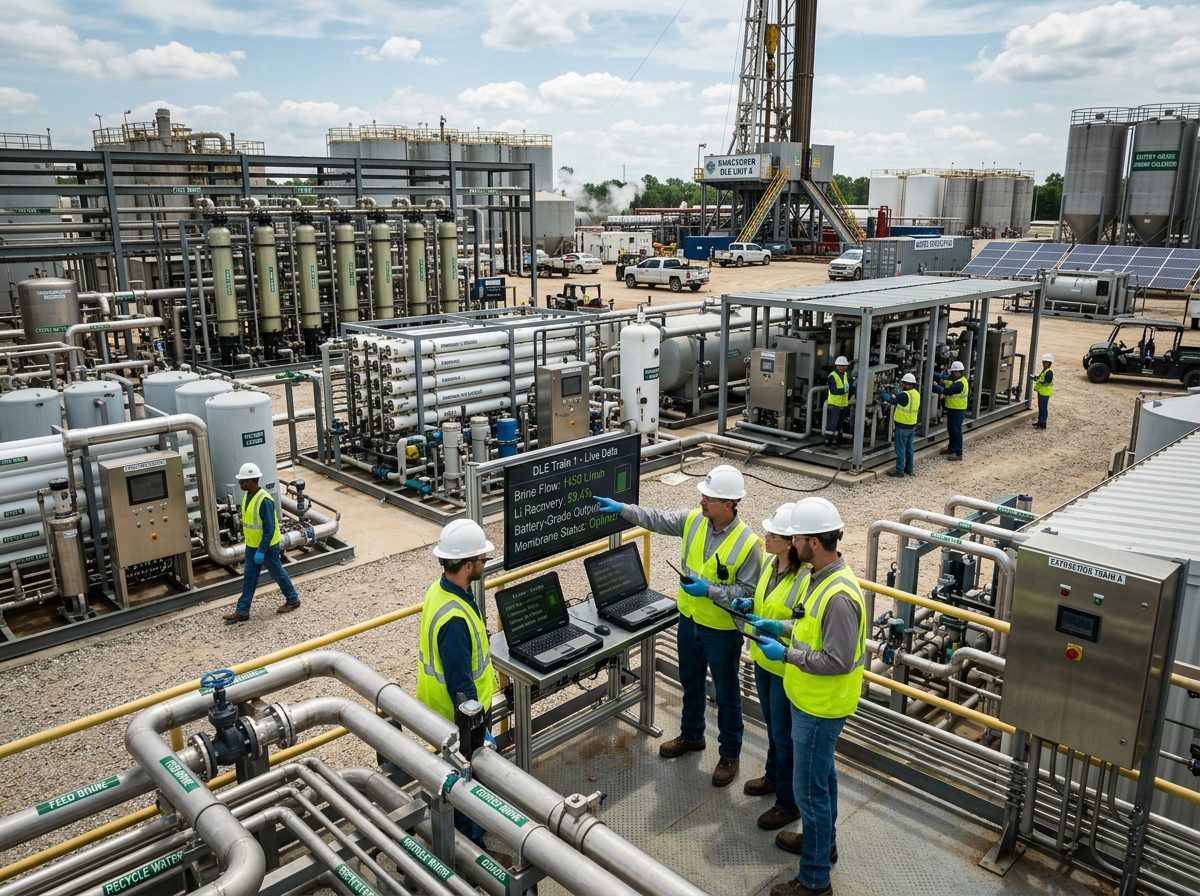
The global race for critical mineral independence has propelled direct lithium extraction companies from a niche technology track into a multi-billion-dollar industrial reality. Bolstered by more than $3 billion in capital investments since 2020, the DLE infrastructure sector is projected to scale into a $5.72 billion market by 2036.
By displacing traditional, weather-dependent evaporation ponds—which require up to two years and capture only half of the resource—these advanced chemical, membrane, and electrochemical architectures recover 70% to 90%+ of latent lithium in a matter of hours. For energy executives and supply chain architects tracking the 2026 landscape, these seven vanguard startups are redefining domestic resource integration.
The Technology Providers: Reagents, Beads, and Membranes
Rather than operating mines directly, these specialized entities design the underlying chemistry and hardware packages, hedging their growth across multiple global brines.
1. Lithios (USA)
● Funding: $15 Million
● The Tech: Pure electrochemistry using zero chemical reagents.
● Executive Takeaway: This MIT spinout bypasses the heavy, ongoing chemical operational costs that impact traditional DLE systems. More critically, Lithios targets ultra-low-grade brines down to 10 ppm lithium that competitors dismiss. Having just crossed 1,000 hours of continuous pilot operation, the company is actively positioning its technology for deployment in the Arkansas Smackover Formation.
2. Lilac Solutions (USA)
● Funding: $315 Million
● The Tech: Proprietary ceramic ion exchange beads with 4,000+ cycle durability.
● Executive Takeaway: Backed by Bill Gates’ Breakthrough Energy Ventures, BMW, and Mitsubishi, Lilac is the most heavily funded pure-play DLE technology vendor in the market. Their Gen 4 platform relies entirely on standard, off-the-shelf equipment for rapid manufacturing scale-up. Lilac has already executed a binding 10-year offtake agreement for Utah’s Great Salt Lake and achieved a 94% recovery rate during pilots in South America.
3. ElectraLith (Australia)
● Funding: $18 Million (A$27.5M Series A)
● The Tech: Direct, single-step membrane electrodialysis.
● Executive Takeaway: Backed by Rio Tinto and Chevron Technology Ventures, ElectraLith eliminates separate downstream refining loops by producing battery-grade lithium hydroxide directly from raw brine in a single step. Operating with zero water consumption and zero chemical inputs, the company is currently constructing its first pilot plant at Rio Tinto’s Rincon operations in Argentina.
The Vertically Integrated Producers: Asset Scaling and Hub Operations
These developers pair proprietary or licensed DLE tech with vast underground leases, racing to lock down the highest-yielding geologic formations.
4. EnergyX (USA)
● Funding: $450 Million+
● The Tech: Hybrid platform merging absorption, solvent extraction, and membranes.
● Executive Takeaway: Backed by a massive structured investment from Global Emerging Markets alongside GM Ventures, EnergyX manages a flexible hybrid tech suite capable of processing nearly any brine chemistry. The company recently brought a 250 tpa demonstration facility online on the Texas-Arkansas border to tap the Smackover Formation, while simultaneously advancing a $725 million project in Chile.
5. Standard Lithium (Canada)
● Funding: $355 Million+
● The Tech: Ion exchange DLE anchored by five years of continuous demonstration data.
● Executive Takeaway: As the only pure-play DLE option traded on major public exchanges (NYSE: SLI), Standard Lithium holds an unparalleled operational data advantage. Supported by a landmark $225 million U.S. Department of Energy (DOE) grant and a 55/45 joint venture with Equinor, the company targets first commercial production in South West Arkansas by 2028, backed by a binding 10-year offtake deal signed in early 2026.
6. E3 Lithium (Canada)
● Funding: $37.5 Million+ (Plus significant non-dilutive government grants)
● The Tech: Proprietary DLE optimized for oilfield reservoir infrastructure.
● Executive Takeaway: E3 Lithium controls Canada’s largest resource base within Alberta’s Leduc Aquifer, holding 7.0 Mt LCE measured and indicated. The company’s core strategy relies on a smart infrastructure pivot: repurposing Alberta’s century of oil and gas assets, workforce, and active well infrastructure to scale battery-grade lithium extraction.
7. Controlled Thermal Resources (USA)
● Funding: $285 Million+ (Transitioning to public markets via a $4.7B SPAC merger)
● The Tech: Geothermal-integrated DLE.
● Executive Takeaway: Operating out of California’s Salton Sea, CTR utilizes a highly efficient co-production framework. The facility extracts high-concentration lithium from hot geothermal brines while simultaneously generating clean, baseload renewable power. Backed by Stellantis, the company is preparing to list on the Nasdaq under ticker CTRH.
The Executive Horizon
For corporate decision-makers, the geography of DLE has focused into an active land rush. The North American market is rapidly organizing around the Arkansas Smackover Formation—holding enough resource potential to meet projected 2030 global EV battery demand nine times over—and the Western geothermal centers.
As the industry advances past pilot-stage metrics, the direct lithium extraction companies that successfully align robust pretreatment protocols with secure, long-term commercial offtake contracts will command the foundational tier of the localized battery value chain.