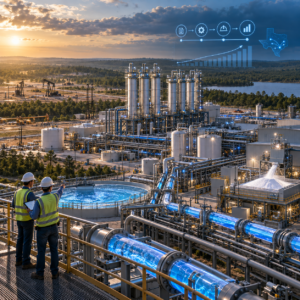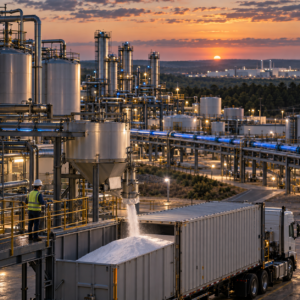
For years, Direct Lithium Extraction (DLE) has been viewed as a promising alternative to conventional evaporation ponds.
Chile is now preparing to deploy it at one of the world’s most strategically important lithium assets.
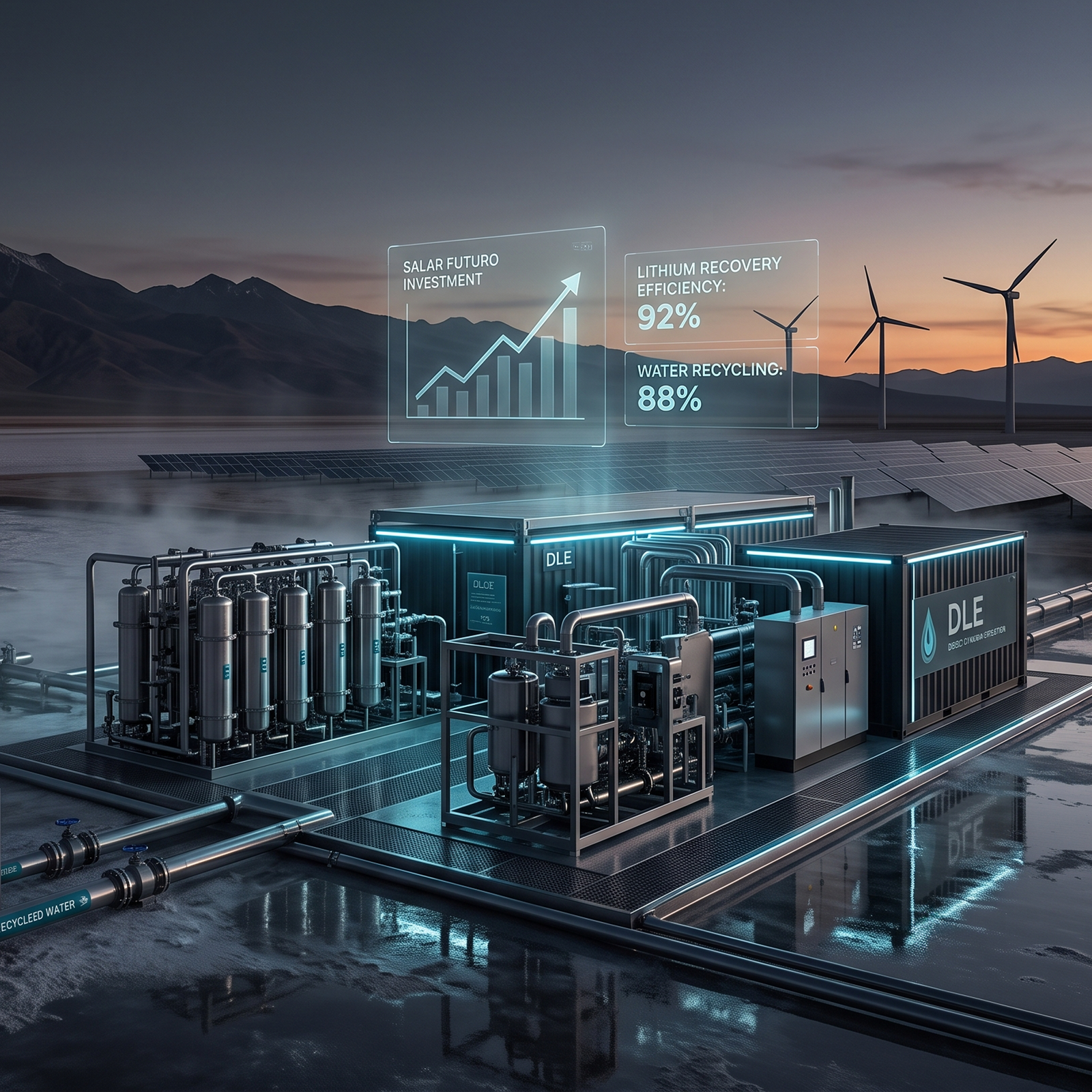
Novandino—the joint venture between Codelco and SQM—has submitted environmental approval for its US$3 billion Salar Futuro project, a long-term development designed to extend lithium production at the Salar de Atacama through 2060. More importantly, the project places Direct Lithium Extraction at the centre of Chile’s next generation of lithium production.
For battery manufacturers, automakers and investors, this is more than another mining project. It reflects how leading lithium producers are beginning to redesign production around efficiency, resource management and long-term supply security.
Chile Is Positioning Direct Lithium Extraction for Commercial Scale
The Salar Futuro project is designed to replace the current production model after existing operating permits expire in 2030.
Rather than expanding traditional evaporation ponds, Novandino plans to introduce Direct Lithium Extraction alongside forced evaporation, nanofiltration and upgraded processing infrastructure.
The objective is clear: increase production while improving resource efficiency and reducing the environmental footprint of lithium extraction.
If approved, annual production capacity is expected to increase to 470,000 tonnes of lithium carbonate equivalent (LCE)—almost double the volumes currently planned for 2028.
Why This Matters
For years, DLE has largely been demonstrated through pilot projects and early commercial deployments.
Deploying the technology at the Salar de Atacama would represent one of the strongest endorsements yet of DLE as a long-term production strategy.
Resource Efficiency Is Becoming a Competitive Advantage
The project highlights how environmental performance is becoming part of commercial competitiveness.
Novandino plans to gradually eliminate the use of continental freshwater by replacing it with recycled process water. Operations are also expected to run entirely on renewable electricity.
Alongside these changes, the project includes expanded hydrogeological monitoring, ecosystem protection programmes and continuous environmental oversight throughout its operating life.
For global battery supply chains, responsible resource management is becoming increasingly important as customers and regulators demand greater transparency across critical mineral production.
Environmental Performance Is Now a Business Metric
The lithium industry is under growing pressure to demonstrate that production can increase without placing additional stress on water resources and sensitive ecosystems.
Projects capable of improving both production efficiency and environmental performance are likely to gain stronger regulatory and commercial support.
Scaling Lithium Supply Requires More Than Extraction Technology
Increasing production at the Salar de Atacama involves far more than introducing DLE.
The project includes new transmission infrastructure, substations, brine transport systems, reinjection facilities, upgraded processing plants and expanded monitoring networks.
Construction is scheduled between 2029 and 2036, with operations planned from 2031 through 2060.
The scale of supporting infrastructure illustrates an important industry reality: commercial DLE depends on integrated project development rather than extraction technology alone.
Infrastructure Will Determine How Quickly DLE Scales
As more producers adopt Direct Lithium Extraction, success will depend on integrating processing facilities, renewable power, water management and logistics into a single operating model.
Technology remains essential, but infrastructure increasingly determines whether projects can reach commercial scale.
What This Means for the Global Lithium Industry
The significance of Salar Futuro extends beyond Chile.
As demand for battery materials continues to grow, lithium producers are under pressure to deliver larger volumes while improving environmental performance and maintaining long-term resource security.
Novandino’s strategy suggests that Direct Lithium Extraction is becoming more than an emerging technology. It is evolving into a core component of future lithium production at some of the world’s most valuable brine resources.
For mining companies, battery manufacturers and investors, the industry is entering a new phase where production growth, operational efficiency and responsible resource management will increasingly be pursued together rather than as separate objectives.
Executive Takeaway
Chile’s latest investment signals that the future of lithium production is no longer centred solely on expanding output.
It is about producing more lithium with greater efficiency, lower resource intensity and infrastructure designed for long-term operation.
As Direct Lithium Extraction moves into larger commercial projects, the industry’s competitive advantage will increasingly depend on how effectively companies integrate technology, infrastructure and environmental performance into a scalable production model.